
There are places that can’t be understood without their architecture. In El Poble Nou de Benitatxell, dry-stone walls, riuraus and traditional rural houses are not just building styles — they are part of the landscape’s identity, visible traces of a way of inhabiting the world rooted in the land, the climate and the people.
Exploring this village with attentive eyes is like travelling through time — a walk through a Mediterranean that quietly endures, silent but alive.
Riuraus: Memory of the grapes
If there’s one type of construction that defines the Marina Alta — and especially Benitatxell — it’s the riurau. This stone and tile building, open on one side with a series of arches, was traditionally used to dry pansa, the muscat grapes which, after harvest, were treated with an alkaline solution and spread on reed mats to dry in the sun.
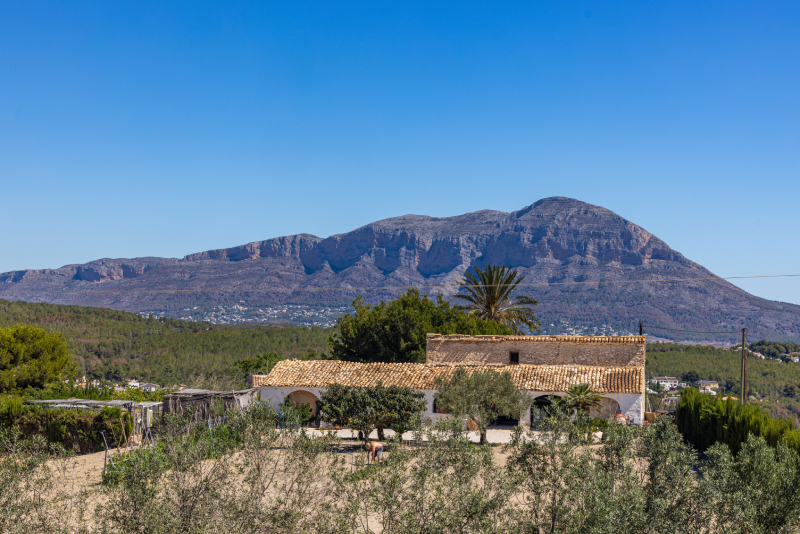
The riurau was much more than a farm shed. It was an extension of the home and daily life — a space for work, but also for gathering. For decades, pansa production was the region’s economic engine, linking this small corner of the world with faraway places like England.
Many riuraus still stand in Benitatxell today, integrated into private estates or surrounded by fields. Some have been preserved or sensitively restored; others have fallen into disuse. Whether visiting up close or simply admiring them from the path, they are a tribute to a humble and functional architecture that once sheltered so much effort and life.
Dry stone: Building with what the land offers
Another key feature of Benitatxell’s built landscape is dry-stone architecture: terraces, walls, steps and small constructions made by stacking stones without cement, using techniques passed down for generations.
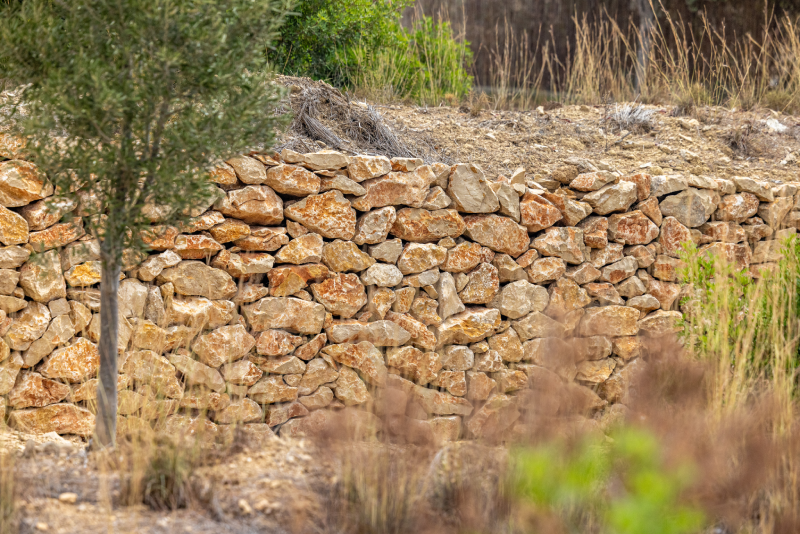
This method — recognised as Intangible Cultural Heritage by UNESCO — follows a simple and profound logic: using local materials to adapt to the topography and human needs.
Dry-stone terraces helped win usable land from slopes, retain rainwater, prevent erosion and mark property lines. But they also shaped a human landscape where order and beauty arose from repetition and patience.
Walking the trails of Benitatxell, one constantly encounters these modest, humble and yet powerful structures.
Country houses and traditional dwellings
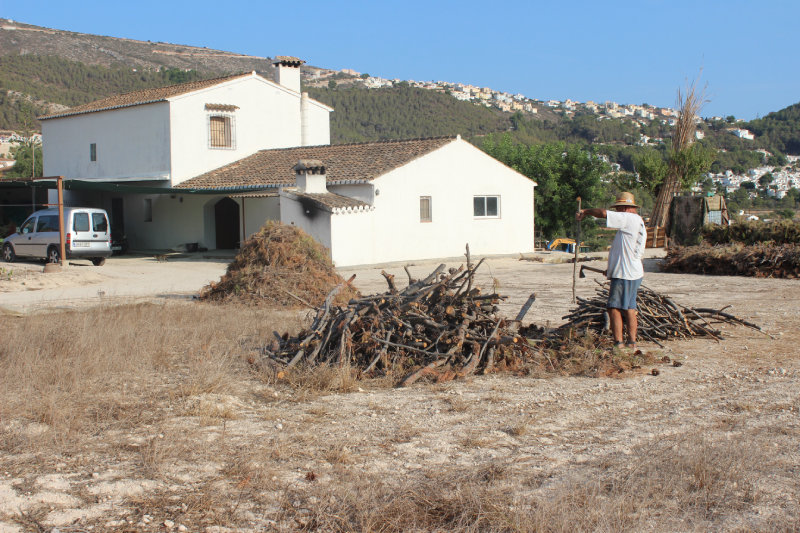
Beyond the riuraus and dry-stone terraces, Benitatxell preserves country houses that have withstood the passage of time. Many still feature elements of vernacular Mediterranean architecture: thick stone and lime walls, gable roofs with Arab tiles, small windows to guard against heat and wind, and wood-fired ovens.
These homes speak of a slower pace of life — one in tune with the seasons and what the environment offers. Even today, many of these buildings are still used for farming or have been repurposed as second homes, without losing their essence.
Inside the village’s historic centre, you’ll also find examples of this traditional architecture — homes that combine function with an austere and welcoming beauty.
A slower, more mindful gaze
These rural houses are not just relics of the past — they offer a quiet invitation to live more slowly and consciously. Observing them, one can imagine daily life in a country home, especially in summer: working early in the morning to avoid the heat, resting in the shade of the porch (naia), harvesting vegetables from the terrace plots, baking coques in wood ovens, or chatting with neighbours into the night…
For those who want to explore with deeper attention, we recommend practicing mindful observation: focus on the arches that support the riuraus, the tiles and windows of the houses, the structure of the dry-stone walls. Every architectural element tells a story — if you listen closely.
You can even turn this into a kind of visual scavenger hunt: How many riuraus can you spot? What differences do you notice between them? How are the terraces built?
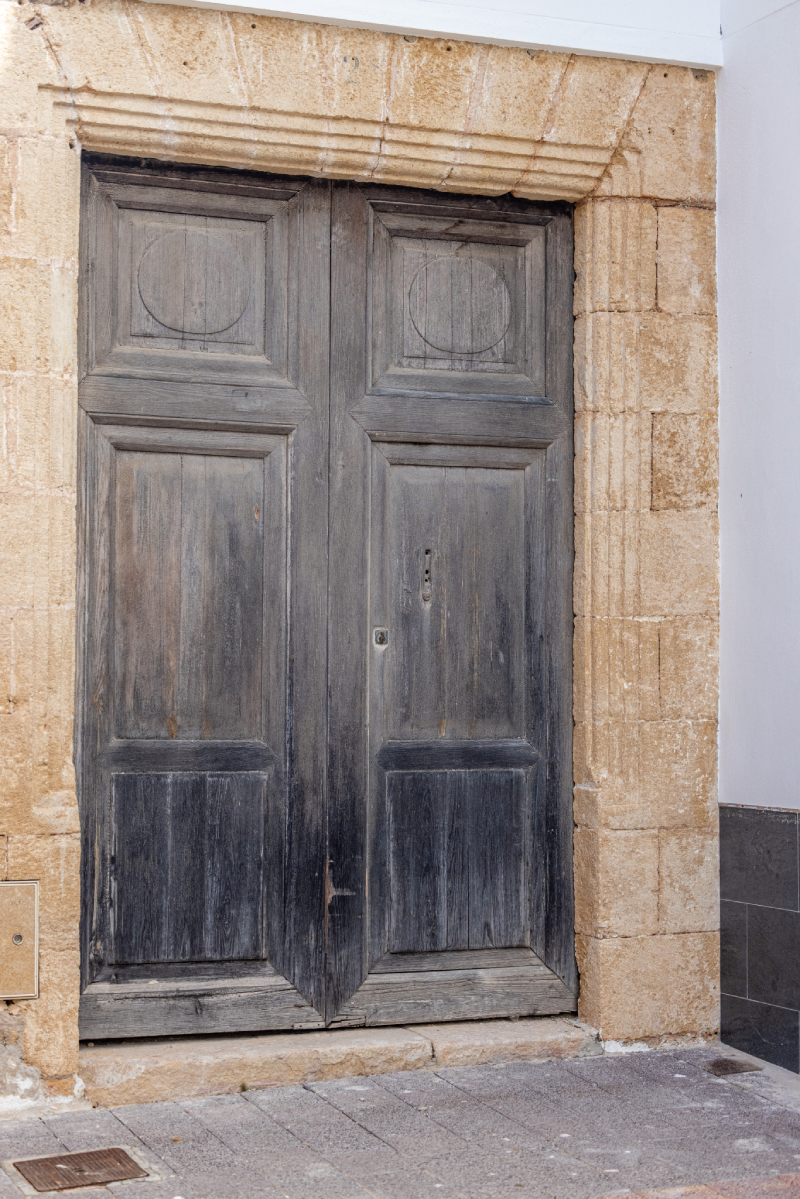
Even better: bring a notebook and sketch whatever catches your eye. Or take photos of specific details — an old door, a carved inscription, a striking corner. These exercises help you connect emotionally with the place and raise awareness of its value.
The landscape as heritage
The true value of Benitatxell’s traditional architecture is not only formal, but also cultural and environmental. Each riurau, each wall, each cottage is part of a whole that explains how people have related to this land for generations.
Too often we think of “heritage” as castles or cathedrals. But rural heritage is just as — if not more — important. It tells the story of everyday life, invisible effort and unplanned beauty.
A route to explore it at your own pace
To discover this traditional architecture, you can follow a circular walking route along the trails of the Respira i Camina project. One suggested route starts from the village centre, heads toward the Pous de l’Abiar, continues to the Parc de les Fonts, and then returns to the historic centre.
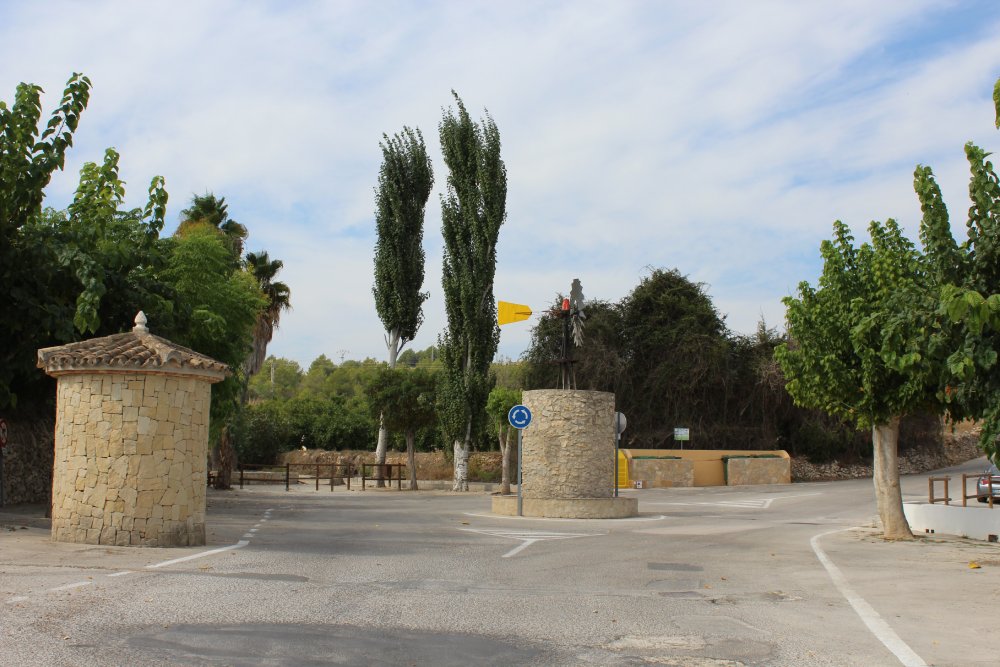
Along the way, you’ll have the chance to observe and appreciate this architectural heritage in its natural context.
Not just seeing — listening
Traditional architecture isn’t just something to visit; it’s something to inhabit with your gaze. There’s no need to go inside the homes or touch the stones. Simply observe them with respect, let yourself fall into their rhythm, and understand that what seems simple is often the wisest.
Breathe the Mediterranean — with your eyes too
In Benitatxell, heritage isn’t locked behind walls — it lives in the paths, the fields, the shadows of the riuraus. It’s a living legacy, woven into the landscape, that invites you to walk slowly and look with curiosity.
We invite you to discover it without rushing, with respect and an open mind — because when you look closely, every stone tells a story.