
Summer brings sun, sea, and discovery. But it also offers a unique opportunity: to connect with the culture, identity, and people who welcome us. In El Poble Nou de Benitatxell, this idea has taken shape in a fresh and conscious initiative that combines local territory and language: “On holiday, speak Valencian.”
This project is a declaration of intent: an invitation to discover the town from a more human, respectful, and rooted perspective. Our language defines us, and we want visitors to experience our full identity.
A pocket guide that speaks for you
The Tourism Department has published a pocket-sized tourist guide, available at the Tourist Office, with a clear goal: to make Valencian accessible, friendly, and useful for visitors.
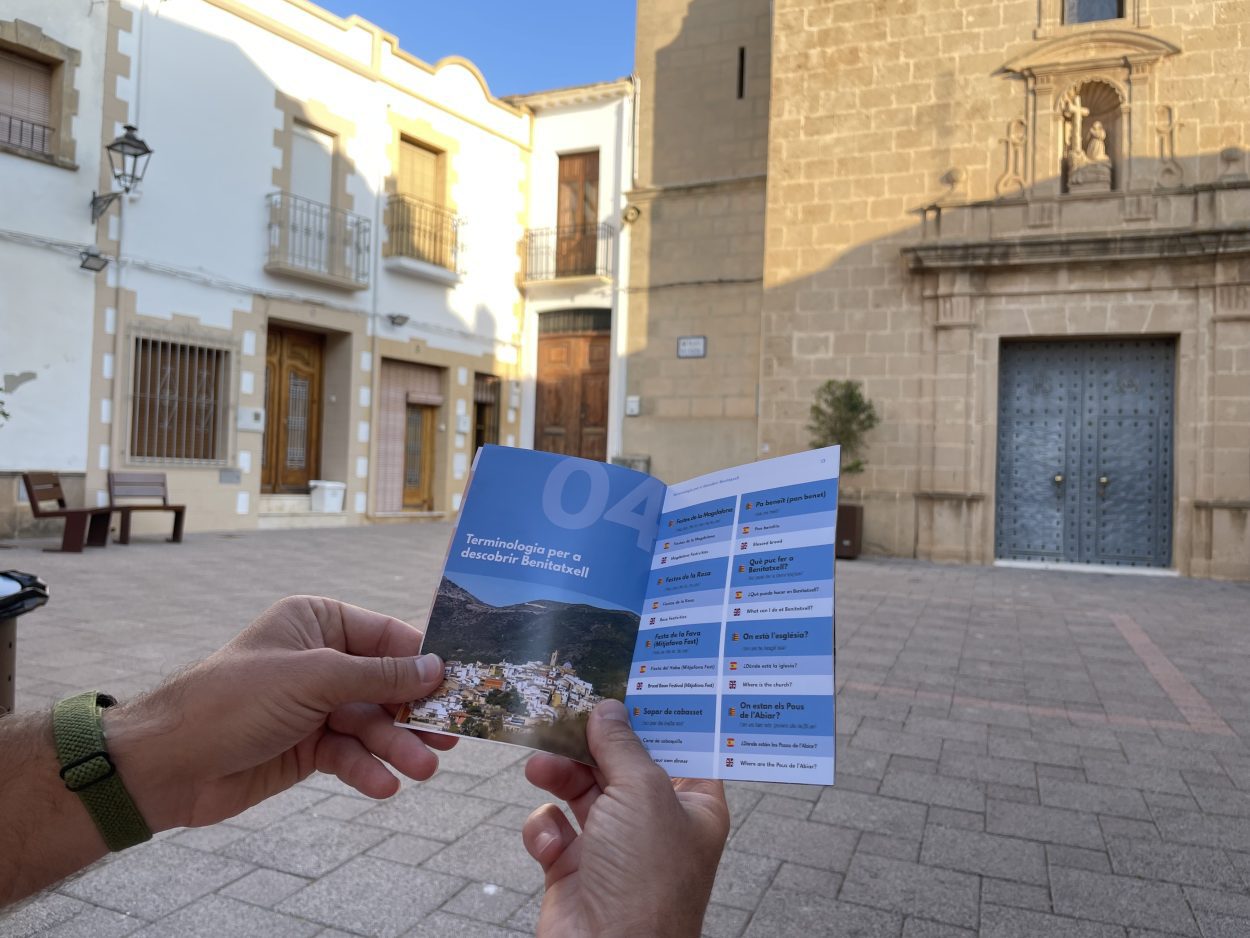
The booklet includes vocabulary, local expressions, and customs, with translations into Spanish and English, as well as a pronunciation guide.
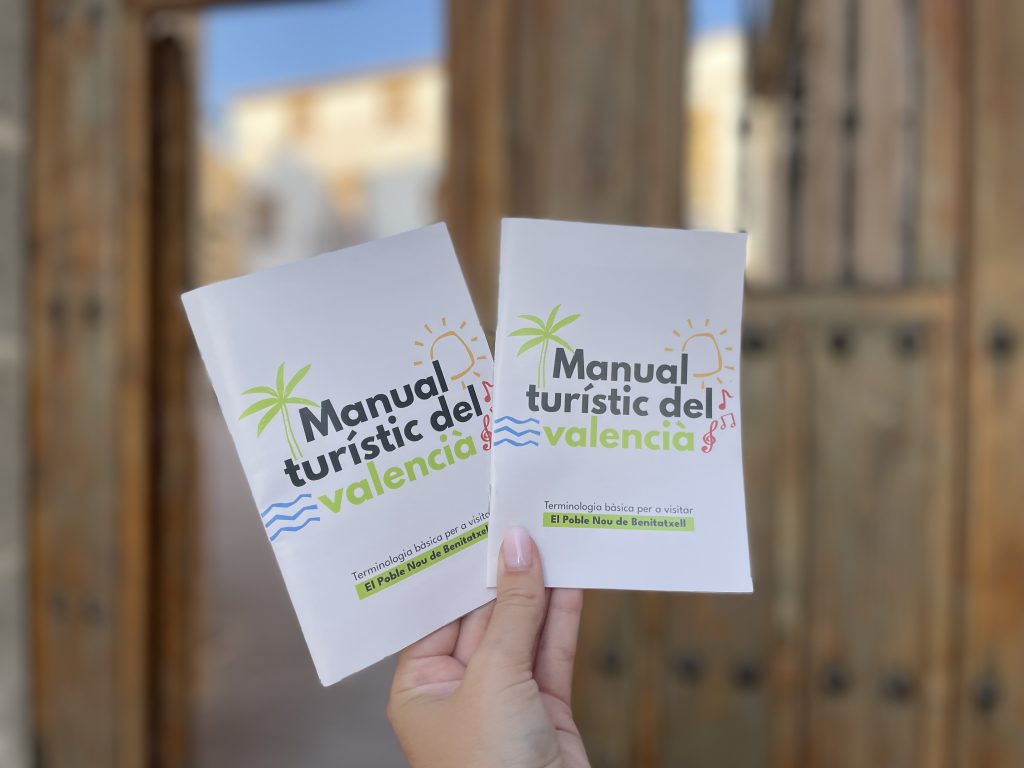
This simple yet effective resource not only facilitates basic communication but also introduces the language to visitors in a welcoming and unpretentious way. It’s a tool to start conversations, show interest, and experience the territory with respect.
Five themes to connect with the territory
The guide is divided into five thematic blocks, corresponding to common situations where Valencian might be used:
Basic expressions: greetings, farewells, and polite phrases
Shopping and markets: buying from local shops and stalls
Gastronomy: names of dishes and common restaurant expressions
Getting to know the town: asking directions or about activities
Accommodation: everyday interactions with hotels, rentals, and apartments
With simple phrases like “Bon dia,” “Quant val això?” or “Una cervesa, per favor,” the visitor breaks the ice and creates bonds with the locals.
Tourism and language: a chance to show respect
This project is part of the strategic approach of the El Poble Nou de Benitatxell Town Council, which promotes more human, sustainable, and conscious tourism. The idea isn’t just to promote a destination, but to show that the place being visited — our village — has its own way of life.
This approach values the local language as an inseparable part of the landscape, traditions, and spirit of the place. Promoting the use of Valencian is not about excluding anyone — it’s about inviting them in. It’s saying: “This place has a voice, and it invites you to listen — and to speak it.”
A shared experience
These booklets are distributed, depending on the season, in strategic locations such as Cala del Moraig, the Tourist Office, municipal buildings, and local businesses.
This allows interactions between locals and visitors to go beyond mechanical exchanges and become opportunities to learn, share, and smile.
A “gràcies” in Valencian, a food order spoken with a foreign accent, or a well-pronounced phrase can spark conversation, connection, and even surprise.
Language, far from being a barrier, becomes a bridge. And that has deep emotional value.
Tourism that enriches everyone
“Respecting the language, customs, and culture of the place you visit is a way of recognising its dignity,” says Councillor for Tourism and Heritage, Víctor Bisquert.
This respectful tourism not only dignifies the host: it also enriches the visitor.
The experience becomes deeper and more transformative. And the territory benefits too: not sold as a product, but offered as a home.
A small gesture that says a lot
Promoting the local language in a tourist context might seem like a small gesture.
But in reality, it’s a profound act of coherence.
It’s about recognising that who we are matters — and can be shared with kindness and respect.
The booklet is, in truth, a symbolic statement: Valencian is not just for the classroom or the home.
It belongs in tourism, in culture, and in hospitality.
And that makes us more open, more diverse, and more authentic.
An open invitation
“On holiday, speak Valencian” is more than a slogan.
It’s an invitation to discover a language, to see the world from a new angle, and to make your journey a dialogue.
So… when you come on holiday — shall we speak Valencian?